









A Slice of American History
Classic American pies are more than familiar desserts. They reflect the ingredients, traditions, and communities that shaped the country over many generations. From apple and pumpkin to pecan and key lime, each pie carries a story of adaptation.
The idea of enclosing food in pastry is much older than the United States. Ancient cooks in the Mediterranean used dough to protect fillings during cooking, while European bakers developed both sweet and savory pies over centuries. When settlers arrived in North America, they brought familiar recipes with them and adapted those recipes to local ingredients and conditions.
The result was not one single “American pie,” but a wide range of regional styles.
Early Influences on American Pie
European settlers introduced wheat flour, butter, lard, sugar, and established baking traditions to North America. English pies were especially influential, as were Dutch, German, French, and Spanish food customs.
Early pies were not always made as desserts. Pastry often served as a sturdy container for meat, vegetables, or fruit. In some recipes, the crust was thick and practical rather than delicate and flaky. Over time, improvements in ovens, milling, and access to sweeteners helped pies become more recognizable as the desserts enjoyed today.
Native ingredients also played an important role. Indigenous peoples had long used foods such as:
– Corn and other grains
– Maple products
– Berries
– Squash and pumpkins
– Nuts
– Native fruits
Settlers learned from local foodways, even as they changed recipes to suit European baking techniques. Many familiar American pies developed from this combination of imported methods and local ingredients.
Apple Pie and the American Identity
Apple pie is often treated as a symbol of American culture, but apples are not native to North America. European settlers brought apple trees, and orchards gradually spread across the colonies and later the growing nation.
Apples were useful because they stored well, could be dried, and worked in both sweet and savory dishes. Early apple pies were usually less sweet than modern versions. Sugar was expensive for many households, so cooks relied on the fruit’s natural flavor, along with spices such as cinnamon and nutmeg when available.
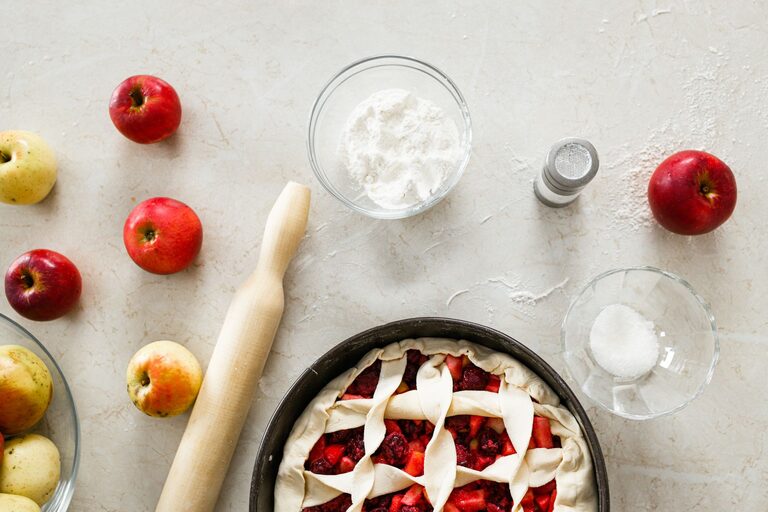
As commercial orchards expanded and refined sugar became more accessible, apple pie became a popular household dessert. By the 19th century, printed cookbooks helped standardize recipes, while regional variations continued to develop. Some bakers added cheddar cheese, raisins, or a crumb topping. Others preferred a double crust with a simple lattice design.
The phrase “as American as apple pie” became especially common in the 20th century. Although the recipe has European roots, apple pie became closely connected with American family meals, diners, holidays, and community gatherings.
Pumpkin Pie and Seasonal Tradition
Pumpkin pie has a long history connected to both Native American food traditions and European baking. Indigenous communities cultivated and cooked pumpkins and other squash long before European settlement. Colonists learned to use these crops, but early preparations were not always like today’s custard-filled pie.
Some early cooks hollowed out pumpkins, filled them with milk, honey, and spices, and cooked them near hot coals. Others adapted European pastry methods to create squash-based fillings. Over time, eggs, cream, sugar, and warm spices became standard ingredients.
Pumpkin pie became strongly associated with autumn and Thanksgiving during the 19th century. Cookbooks and magazines helped establish a common style: a smooth, spiced custard baked in a single crust. Canned pumpkin later made the dessert easier to prepare and helped create a consistent texture from kitchen to kitchen.
Today, pumpkin pie remains one of the clearest examples of how seasonal ingredients can become part of a national tradition.
Pecan Pie and Southern Ingredients
Pecan pie is closely linked to the American South, where pecan trees grow naturally. Pecans were important food sources for Native American communities before European settlement, and they later became common in Southern cooking.
The exact origins of modern pecan pie are difficult to assign to one person or place. Earlier recipes combined nuts with sweet fillings, but the familiar version developed through the use of eggs, sugar, butter, and sometimes corn syrup. Printed recipes for pecan pie became more common in the late 19th and early 20th centuries.
The pie’s popularity grew as pecans became easier to harvest, package, and distribute. Its rich filling and distinctive nut topping made it a natural choice for holiday tables, especially in the South and across the wider United States.
Pecan pie also shows how regional crops can shape a broader food culture. What began as a dessert based on a local nut eventually became a familiar national favorite.
Cherry Pie, Celebration, and Folklore
Cherry pie has European predecessors, but it found a strong place in American baking because cherries grew well in several parts of the country. Tart cherries, especially, became popular for pies because their flavor balanced the sweetness of sugar.
Cherry pie was often served at summer gatherings, picnics, and holiday meals. Its bright filling and decorative crust made it especially appealing for celebrations. The pie also became linked with stories about American folklore and national symbols, although many of those stories were created or popularized long after the recipes themselves were established.
Like apple pie, cherry pie benefited from advances in food preservation. Canning and commercial fruit processing allowed people to enjoy cherry fillings beyond the short harvest season.
Regional Classics Beyond the Big Four
American pie traditions extend well beyond apple, pumpkin, pecan, and cherry. Regional recipes often reflect local crops, immigrant communities, and available cooking methods.
Key Lime Pie
Key lime pie is associated with the Florida Keys. Traditional versions use small, tart key limes and a creamy filling made with condensed milk and egg yolks. The recipe developed in a region where fresh milk was historically difficult to obtain and condensed milk was convenient to store.
Shoofly Pie
Shoofly pie is associated with Pennsylvania Dutch cooking. It features a sweet molasses filling and a crumb topping. The pie reflects German American baking traditions and the use of pantry ingredients that were readily available in rural households.
Chess Pie
Chess pie is a Southern dessert made with a simple filling that commonly includes eggs, sugar, butter, and cornmeal or flour. Its straightforward ingredients made it practical for home bakers, and many families developed their own variations.
Sugar Cream Pie
Sugar cream pie is strongly connected with Indiana and the Midwest. Made from basic ingredients such as cream, sugar, butter, and flour, it became popular in areas where fresh fruit was not always available year-round.
How Pies Changed Over Time
Several developments helped American pies move from home kitchens into bakeries, restaurants, and supermarkets:
- **Improved milling:** More consistent flour made pastry easier to prepare.
- **Better ovens:** Regulated heat helped bakers achieve more reliable crusts and fillings.
- **Affordable sugar:** Lower prices made sweet pies more accessible.
- **Canning and refrigeration:** Fruit fillings could be stored and used throughout the year.
- **Cookbooks and magazines:** Written recipes spread regional styles to new audiences.
- **Commercial baking:** Bakeries and food companies introduced pies to a wider market.
These changes did not replace homemade traditions. Instead, they added new options, from frozen pie shells to ready-made fillings and modern decorative crusts.
Why Classic Pies Still Matter
Classic American pies remain popular because they are flexible and connected to memory. A pie can highlight a local ingredient, mark a holiday, or bring together a family recipe passed down through generations.
Their history also reminds us that food traditions are rarely created in isolation. American pies grew from Native ingredients, European techniques, immigrant customs, regional agriculture, and modern food production. Each generation has adjusted these recipes while preserving their central appeal: a flavorful filling, a comforting crust, and a reason to gather around the table.
From a simple slice of apple pie to a regional specialty made with local fruit or nuts, classic American pies continue to tell the story of the places and people who made them.